Microcausalidad, propagators and Reeh-Schlieder
When one wants to force the equations of relativistic kinematics to describe a particle moving with its wave function, finds inconsistencies mathematics. These are solved in the framework of quantum field theory, allowing creation and annihilation of particles, ie, moving to a theory in which the number of particles is not fixed. The particle as an object of study is replaced by the field, a complicated object whose excitations give rise to particles. The failure to consider a fixed number of particles such clear thinking on the problem of the location of a single particle: as we confine more and more and use more energy to it in our detection experiment, according to the uncertainty principle the time of the particles is increasing and, given the high energies involved in quantum field theory this leads to the appearance of pairs of particles in the vacuum.
Propagation of excitations of the field is called propagator. The propagator is a solution to the equations of motion of the field generated by the existence of a point source or disruption - is what is known as Green's function equations of motion. In nonrelativistic quantum mechanics the propagator of the Schrödinger equation represents a particle moving us from one point to another. In quantum field theory the propagator is not a single particle. In fact, the propagator is nonzero outside the light cone of an event. This means that the field excitation represented by the propagator has a non-zero probability to exist outside their own light cone. This can not represent a particle as the particle otherwise violate causality. The idea of \u200b\u200brepresenting a particle propagator tends to be somewhat widespread. For example, in the Feynman diagrams we see internal lines and think that is a single virtual particle is exchanged two outer lines (real particles) to interact. The internal lines are propagators of the field exactly and do not represent particles but a sum over all possible times. To some extent a sum over an infinite number of basic states of particles.
saves Causality in quantum field theory as soon as one considers correlations between measurements. In general any influence on measurements is determined to stay within the cone of light, a famous result (known as microcausalidad). A correlation of measurements is not a mathematical object as the propagator, but something related to the commutator of the field. If the commutator of the field at two different points then there is no causal correlation between these two points. As the particles are somewhat measurable this ensures that we can never detect a particle out of its own light cone a later time. That is, given a measurement of a particle in a region of space, a measure in another region causally disconnected (outside the cone of light from the first) must have zero probability of finding the particle. This sober measurements causal behavior contrasts the behavior of the propagator and in general of the states in the theory. We must differentiate between states and measurements.
precisely this difference is essential in the known Reeh-Schlieder theorem. This theorem says that if we have a bounded region of space-time S, the action of the operators O (S) (defined as combinations of field operator on smooth functions on S and zero outside S) on the empty O (S) the measurements we make with our detector outside or inside the cone of light. Are measurements which are set by the condition of microcausalidad and not states. The Reeh-Schlieder theorem tells us states, microcausalidad measurements. Microcausalidad status indicates that given a field excitation as x, the measurement of other excitement in and, in x, and spatially separated (outside their respective cones of light) can not be correlated with the previous. Is the propagator of the field that changes from one state to another and it seems clear that while we in the states Concentrates contributions outside the cone of light will be possible. In the end, however, these contributions are canceled when you study measurements.
Friday, May 29, 2009

Wednesday, May 27, 2009
Bleach Doujinshi Orihime
Finally, the launch of Planck
 This blog is ultimately little moved but I can not go without mentioning the launch of the Planck-day May 14 as probably any reader know of the news media. The satellite is directed to the Lagrange point 2, which will start operating. If we follow the WMAP mission probably the first results are available within a year or a year and a half.
This blog is ultimately little moved but I can not go without mentioning the launch of the Planck-day May 14 as probably any reader know of the news media. The satellite is directed to the Lagrange point 2, which will start operating. If we follow the WMAP mission probably the first results are available within a year or a year and a half. 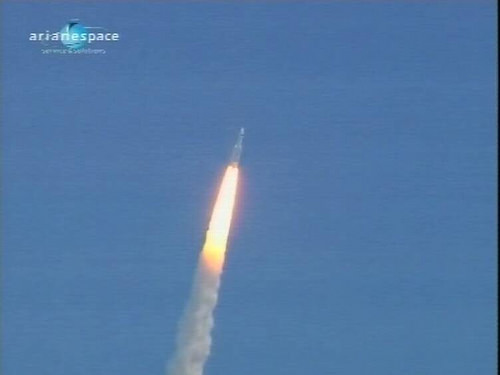
Thursday, May 14, 2009
Rejected To Cambridge 2010
REDUCE, FACTORS AND DEVELOPING ALGEBRAIC CALCULATION
I leave a photocopy of the chapter to be working these weeks.
expalg_gauss2 
I leave a photocopy of the chapter to be working these weeks.
expalg_gauss2
at Scribd Publish or explore others:
Tuesday, May 5, 2009
Counter Strike Source Lite The Game
written
We have seen in past activities to represent various situations in which the numbers vary or simply know their value, letters are used. We find formulas
combining letters with numbers using known operations, in which letters represent numbers to be calculated ( unknowns) or numbers that can take many values \u200b\u200b( variables).
Such expressions are called algebraic expressions or literal expressions.
Here's how the calculations are made when working with algebraic expressions. That is, how to perform the operations that we know when we work with algebraic expressions and not just numbers. Previously
we know some "names" that are used frequently. Read the fact sheet below and make the proposed activities. Monomials
DISTRIBUTIVE PROPERTY
It is now essential that you review the distributive property . It is used quite frequently in algebraic calculations.
 Or
Or
we can write this:

Because the multiplication satisfies the commutative property , one that says that the order of factors does not alter the product, remember?

Watch this property is used to add or subtract like monomials.

You can only add or subtract monomials that are similar. Because, just by having the same literal part, you may take it as a common factor .

To multiply monomials need not be similar. The multiplication can be done forever.
is important to remember the properties of the multiplication of powers with the same base.

PROPERTY DISTRIBUTION EXPANDED. Notes
now this:
Our rectangle is split into four. Move the red dots and see the expressions written below the figure.
How would you write in symbols this property? 
We have seen in past activities to represent various situations in which the numbers vary or simply know their value, letters are used. We find formulas
combining letters with numbers using known operations, in which letters represent numbers to be calculated ( unknowns) or numbers that can take many values \u200b\u200b( variables).
Such expressions are called algebraic expressions or literal expressions.
Here's how the calculations are made when working with algebraic expressions. That is, how to perform the operations that we know when we work with algebraic expressions and not just numbers. Previously
we know some "names" that are used frequently. Read the fact sheet below and make the proposed activities. Monomials
at Scribd Publish or explore others:
DISTRIBUTIVE PROPERTY
It is now essential that you review the distributive property . It is used quite frequently in algebraic calculations.
 Or
Or we can write this:

Because the multiplication satisfies the commutative property , one that says that the order of factors does not alter the product, remember?

Watch this property is used to add or subtract like monomials.

You can only add or subtract monomials that are similar. Because, just by having the same literal part, you may take it as a common factor .

To multiply monomials need not be similar. The multiplication can be done forever.
is important to remember the properties of the multiplication of powers with the same base.

PROPERTY DISTRIBUTION EXPANDED. Notes
now this:
Our rectangle is split into four. Move the red dots and see the expressions written below the figure.
How would you write in symbols this property?
Monday, May 4, 2009
Short Cute Picnik Quotes
RESOLVED
PROBLEM. Notes
sequence of figures constructed with sticks of equal length.

a) Draw the two figures that follow.
b) How many sticks are needed to build them? In each, porsupu.
c) How many sticks are needed to build the figure that ranks No. 10?
d) And to build the figure N ° 123?
e) Write in words a rule that allows you to calculate the number of sticks if you know the number of the figure. ---------------------- --------------------
or
Then I show some students made solutions.
are very good. Congratulations!
FIRST SOLUTION

WAY TO SOLVE SECOND


PROBLEM. Notes
sequence of figures constructed with sticks of equal length.

a) Draw the two figures that follow.
b) How many sticks are needed to build them? In each, porsupu.
c) How many sticks are needed to build the figure that ranks No. 10?
d) And to build the figure N ° 123?
e) Write in words a rule that allows you to calculate the number of sticks if you know the number of the figure. ---------------------- --------------------
or
Then I show some students made solutions.
are very good. Congratulations!
FIRST SOLUTION

WAY TO SOLVE SECOND

Subscribe to:
Comments (Atom)